Associate Professor of Architecture • Licensed Architect • Researcher • Author
Explore the work of an architect and academic whose research and professional practice bring together natural ventilation, passive design, spatial cognition, wayfinding, and sustainable built environments.
Akubue Jideofor Anselm’s books transform complex architectural concepts into accessible resources for students, researchers, professionals, and readers interested in the built environment.
Akubue Jideofor Anselm is an Associate Professor in the Department of Architecture at Baze University, Abuja, Nigeria. He holds a Bachelor’s and Master’s degree in Architecture, along with a Doctorate in Green Design and Building Physics from Huazong University of Science and Technology (HUST), Wuhan.
Fluent in English and Mandarin, he specializes in Buildings and Passive Design Strategies, Earth-Sheltered Housing, and Spatial Cognition & Way-Finding Principles. As a licensed architect, he has designed residential, commercial, educational, and administrative buildings across Nigeria. His research and practical expertise make him a prominent voice in sustainable architecture.
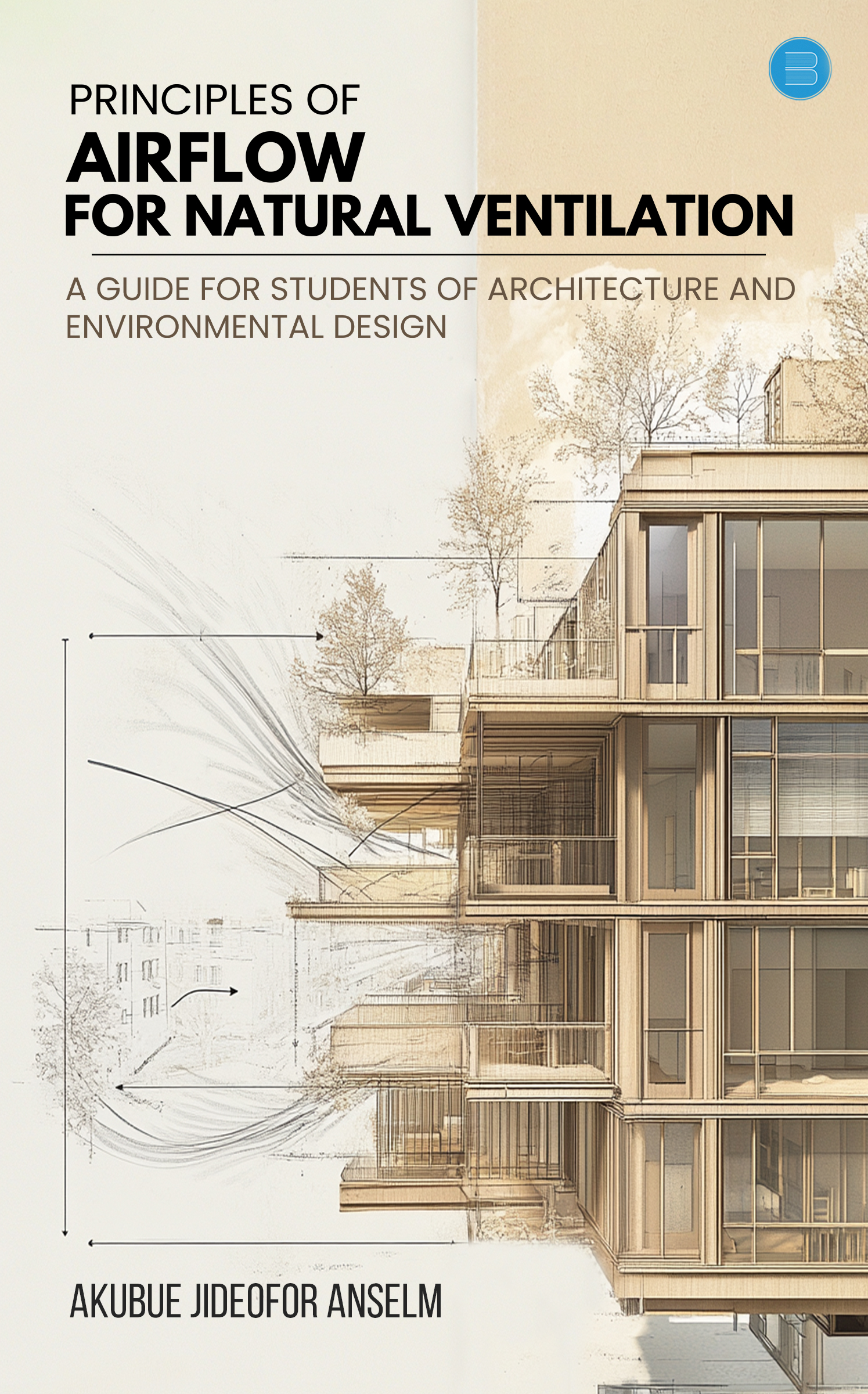
Natural ventilation is one of the fundamental principles of sustainable building design. Yet understanding airflow, air movement, and passive cooling requires more than theoretical knowledge—it requires the ability to connect scientific principles with practical architectural decisions.
Principles of Airflow for Natural Ventilation provides an abridged and accessible introduction to the fundamental principles of airflow in relation to natural ventilation in buildings.
Drawing from the author’s teaching, research, and practical experience, the book is designed to inspire and enlighten students while providing useful insights for anyone interested in architecture and sustainable design.
The book responds to the growing need for accessible reference materials for students in schools of environmental studies, architecture enthusiasts, and readers interested in sustainable built environments.
Why Read This Book?
01 — Build a Strong Foundation The book introduces fundamental airflow concepts in a clear and accessible manner, making it particularly useful for students beginning their exploration of natural ventilation.
02 — Connect Theory With Architecture Rather than treating airflow as an abstract scientific concept, the book connects principles with their practical relevance to building design.
03 — Explore Sustainable Design Discover how natural ventilation and passive cooling can contribute to more responsive and sustainable built environments.
04 — Learn Through Illustrative Insights Visual and illustrative approaches help stimulate understanding and make complex ideas easier to comprehend.
Book Is Available On
Learn more about specific products and programs available to you.
Have you ever entered a large building and suddenly lost your sense of direction?
Disorientation is a common human experience, particularly in large and complex buildings. Hospitals, institutional buildings, commercial spaces, airports, and other expansive environments can present significant challenges when circulation and wayfinding are not properly considered.
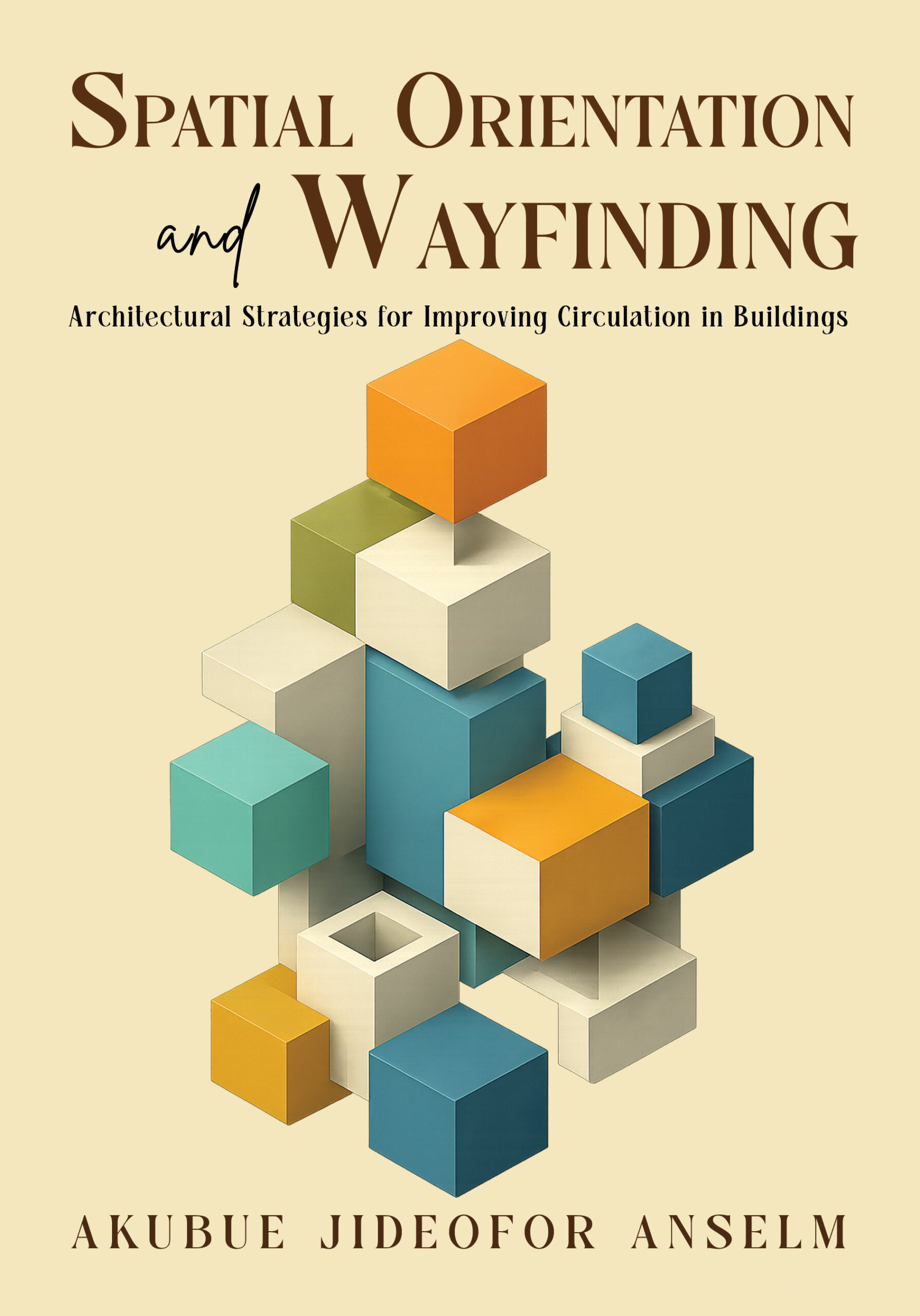
Spatial Orientation and Wayfinding: Architectural Strategies for Improving Circulation in Buildings provides a concise and accessible introduction to the challenges of wayfinding and explores architectural strategies for improving orientation, circulation, and human movement.
The book examines how the human body depends on the accurate perception and cognitive integration of different sensory systems.
Why Read This Book?
01 — Understand Spatial Disorientation Explore why people lose their sense of direction and how architectural environments can contribute to confusion and disorientation.
02 — Learn How People Navigate Buildings Understand the relationship between perception, cognition, circulation, and human movement within built environments.
03 — Improve Architectural Circulation Discover strategies that can help architects create clearer, more efficient, and more intuitive circulation systems.
04 — Learn Through Real Building Examples Case studies and analysis of selected building types—including hospitals—help connect theoretical concepts with practical architectural applications.
05 — Apply the Principles to Design The book goes beyond explaining the problem and presents practical approaches for improving wayfinding through architectural design.
Book Is Available On
Learn more about specific products and programs available to you.